
.png)
Samsung Smart TV Configuration Help: 12 Settings You Should Change First

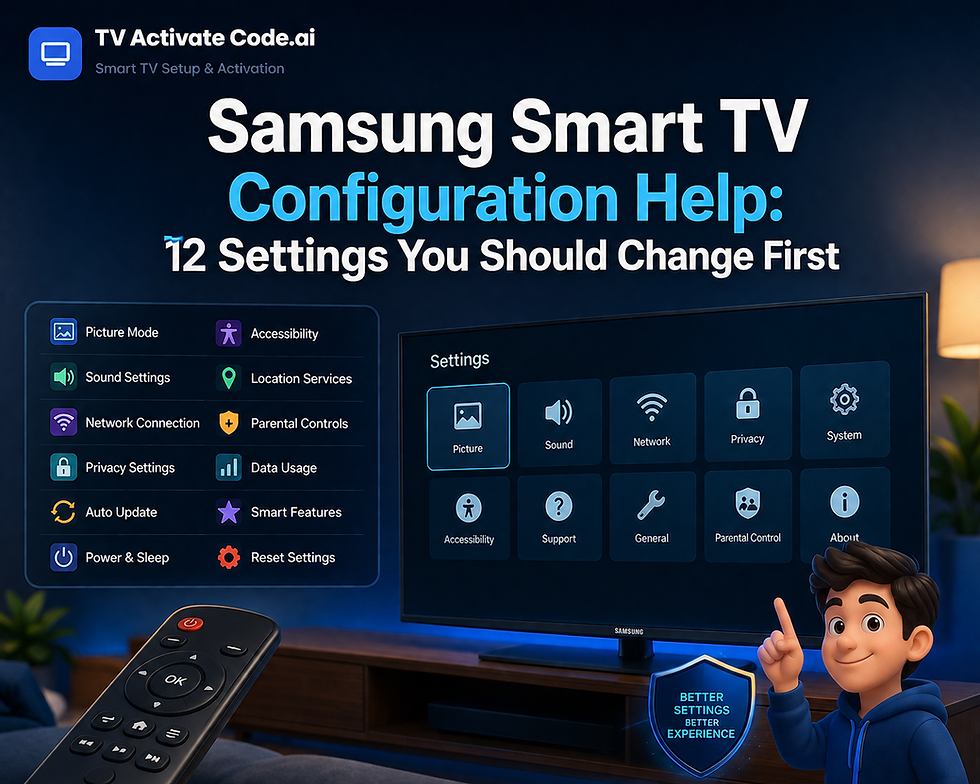
Setting up a Samsung Smart TV is only the first step toward getting the best viewing experience. After completing the initial installation, you still need to adjust several settings to improve picture quality, sound performance, connectivity, privacy, and smart features. Many users complete the setup process but miss important configurations that can make their TV experience smoother.
This TV configuration help guide explains the most important Samsung Smart TV settings you should review and change after setup. Whether you have a new TV or want to optimize your existing device, these adjustments can help you get better performance.
1. Adjust Picture Settings for Better Viewing
The default picture settings on a Samsung Smart TV may not always provide the best experience. Changing the picture mode based on your usage can improve clarity and colors.
Go to:
Settings → Picture → Picture Mode
You can choose options like:
Standard mode for everyday watching
Movie mode for a cinematic experience
Dynamic mode for brighter rooms
Filmmaker mode for a more natural picture
You can also adjust brightness, contrast, sharpness, and color settings according to your preference.
2. Configure Sound Settings
Good audio settings are just as important as picture quality. Samsung TVs offer different sound options depending on your room and audio equipment.
Go to:
Settings → Sound
You can configure:
Sound mode
Equalizer settings
Adaptive Sound
Audio output options
If you are using a soundbar or external speakers, make sure the correct audio output is selected.
3. Check Your Network Connection
A stable internet connection is necessary for streaming apps, software updates, and smart features. After setting up your Samsung TV, check your Wi-Fi connection and make sure the signal strength is good.
You can find network settings under:
Settings → General → Network
If apps are loading slowly, reconnecting Wi-Fi or restarting your router may help.
4. Update Your Samsung Smart TV Software
Samsung regularly releases software updates to improve performance, security, and features. Keeping your TV updated can fix existing issues and provide access to new improvements.
Go to:
Settings → Support → Software Update
Enable automatic updates if available so your TV stays updated without manual checking.
5. Configure Samsung Account and Smart Features
A Samsung account allows you to access additional smart features, download apps, and personalize your TV experience.
After signing in, review:
App preferences
Smart Hub settings
Connected services
Proper account configuration makes it easier to manage your TV features.
6. Manage Apps and Smart Hub Settings
Many users install streaming apps but forget to organize their Smart Hub. Remove unused apps and arrange frequently used applications for quick access.
You can manage apps through the Apps section on your Samsung Smart TV.
If you are accessing streaming platforms, some services may require activation through their official platforms, such as Tv com activate, before you can start watching content.
7. Review Privacy Settings
Smart TVs collect certain information to provide personalized features. Reviewing privacy settings gives you more control over your data.
Check options related to:
Data collection
Personalized advertisements
Voice recognition
Connected services
Adjust these settings according to your comfort level.
8. Configure External Devices and HDMI Settings
If you connect gaming consoles, streaming devices, or Blu-ray players, configure HDMI settings for better performance.
Check:
HDMI input names
HDMI-CEC settings
Game Mode
Input detection options
Gamers should enable Game Mode to reduce input delay and improve responsiveness.
9. Set Up Voice Assistant Features
Many Samsung Smart TVs support voice assistants that allow you to control settings, search content, and open apps using voice commands.
Review voice settings and select your preferred assistant. You can also adjust microphone and privacy permissions.
10. Enable Energy Saving Features
Energy-saving settings can help reduce power consumption without affecting normal viewing.
Go to:
Settings → General → Power and Energy Saving
You can adjust:
Brightness optimization
Auto power off
Energy-saving options
Choose settings that match your viewing habits.
11. Configure Parental Controls
If children use the TV, parental controls can help manage content access and app usage.
You can configure:
Content restrictions
App limitations
Purchase restrictions
This adds an extra layer of control for family viewing.
12. Create a Final Configuration Checklist
After completing all settings, review your Samsung Smart TV configuration one more time:
Picture settings optimized
Sound adjusted
Wi-Fi connected properly
Software updated
Apps organized
Privacy settings reviewed
External devices configured
A proper configuration ensures your TV works smoothly and provides a better entertainment experience.
Get More Help with TV Setup and Activation
For users who need additional assistance with installation, activation, or device-related issues, Tv Activate Code provides helpful resources for understanding TV activation processes and setup-related information.
A correct configuration after setting up Samsung TV can improve performance, reduce common problems, and help you enjoy all smart features without unnecessary troubleshooting.


Comments